Starting Over Every Monday? The Moment You May Be Getting Wrong
If you’ve spent years beating yourself up for not sticking with your healthy habits, there’s something I want you to reconsider. It has to do with that moment when you hesitate, feel resistance, or suddenly don’t want to do the thing you were so determined to do yesterday.
You know the routine. You’ve made the plan, bought the notebook, and promised yourself that this Monday will be different. And for a while, sometimes it is.
Then life happens. You’re tired, the day’s been stressful, or an urge shows up that you weren’t expecting. You find yourself negotiating over something you’d already decided, and before you know it, you’re thinking, “Here we go again.“
After enough years of that, the hardest part isn’t necessarily the missed walk or the evening snack. It’s what you’ve come to believe those moments say about you.
Every hesitation becomes evidence that you’re not disciplined enough. Every rough day seems to confirm that you’ll never get this consistency thing figured out.
But what if we’ve been looking at the hesitation moment all wrong?

Why hesitation feels like failure
I think a lot of us have been taught, directly or indirectly, that self-trust comes after we’ve finally gotten our act together. Once the habits are automatic, the cravings have disappeared, and we don’t have to argue with ourselves about doing what’s good for us, THEN we’ll know we’ve changed.
➡️ That’s a pretty miserable standard, when you think about it.
Consider what happens when the alarm goes off and you don’t leap out of bed like some cheerful fitness robot🤖. Your brain immediately starts with, “See? Here we go again.”
Or you’ve planned to walk after lunch, but when the time comes, you’re not particularly interested. Suddenly, it’s “If I really wanted this, I wouldn’t have to make myself do it.”
And then there’s the evening kitchen visit. You’d planned to skip the automatic snacking, but there you are looking in the cabinet, wondering what the heck is wrong with you.
Notice what happened in each of those examples.
A perfectly ordinary moment of resistance got turned into a judgment about your character.
That interpretation can be a problem all by itself. Because once you’ve decided your hesitation proves you’re failing, it’s awfully easy to abandon the plan altogether.
But resistance doesn’t automatically mean anything about your ability to change. It’s a familiar response showing up in a moment when you have an opportunity to practice something different.
Think about it like strength training
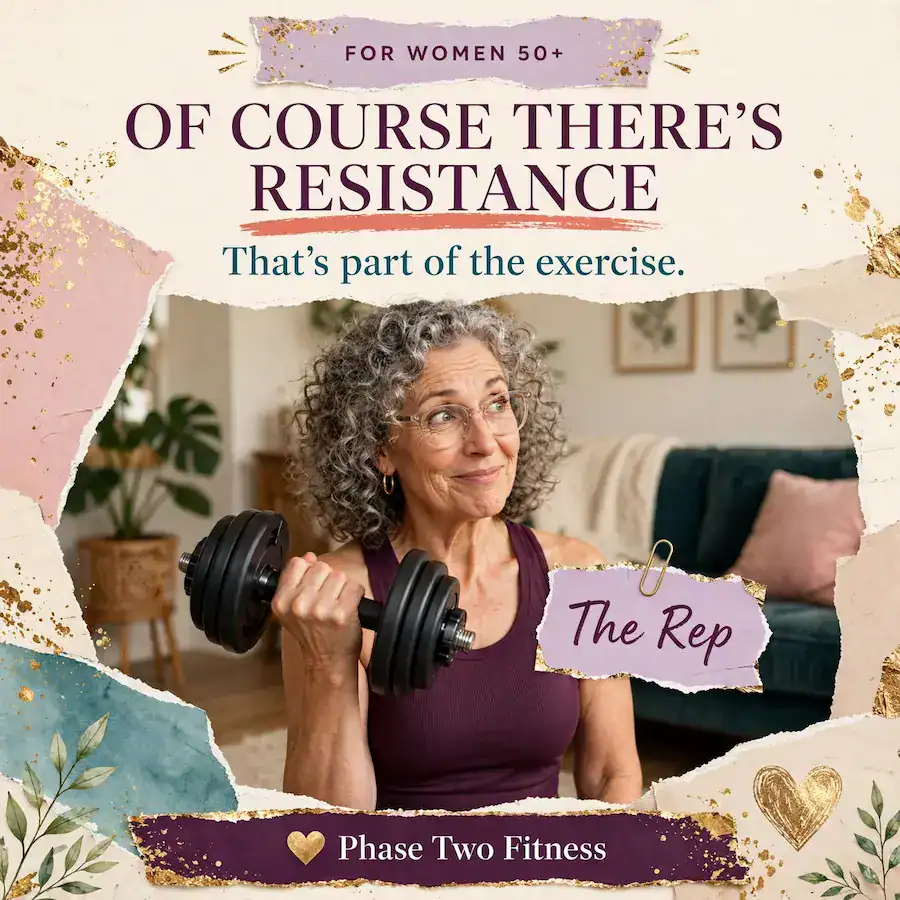
If you were lifting a weight, you wouldn’t get to the part where your muscles have to work and decide that the effort proves strength training isn’t for you.
Of course there’s resistance. That’s part of the exercise.
Learning a different response to an old habit has something in common with that. Your brain has gotten very good at certain sequences, and when you interrupt one, it may object.
You want to skip the walk. You feel that familiar pull toward the kitchen. Your brain offers a perfectly reasonable-sounding explanation for why tomorrow would be better.
The useful question isn’t whether you managed to avoid feeling that resistance. It’s whether you can recognize what’s happening and choose what to do next.
And sometimes that choice is going to require effort. You’re practicing something that isn’t yet familiar.
That’s where the rep comes in.
The meditation comparison that changed how I think about practice
Here’s an example I love because it makes this so much easier to understand.
People sometimes imagine successful meditation as sitting peacefully with a completely empty mind, never getting distracted.
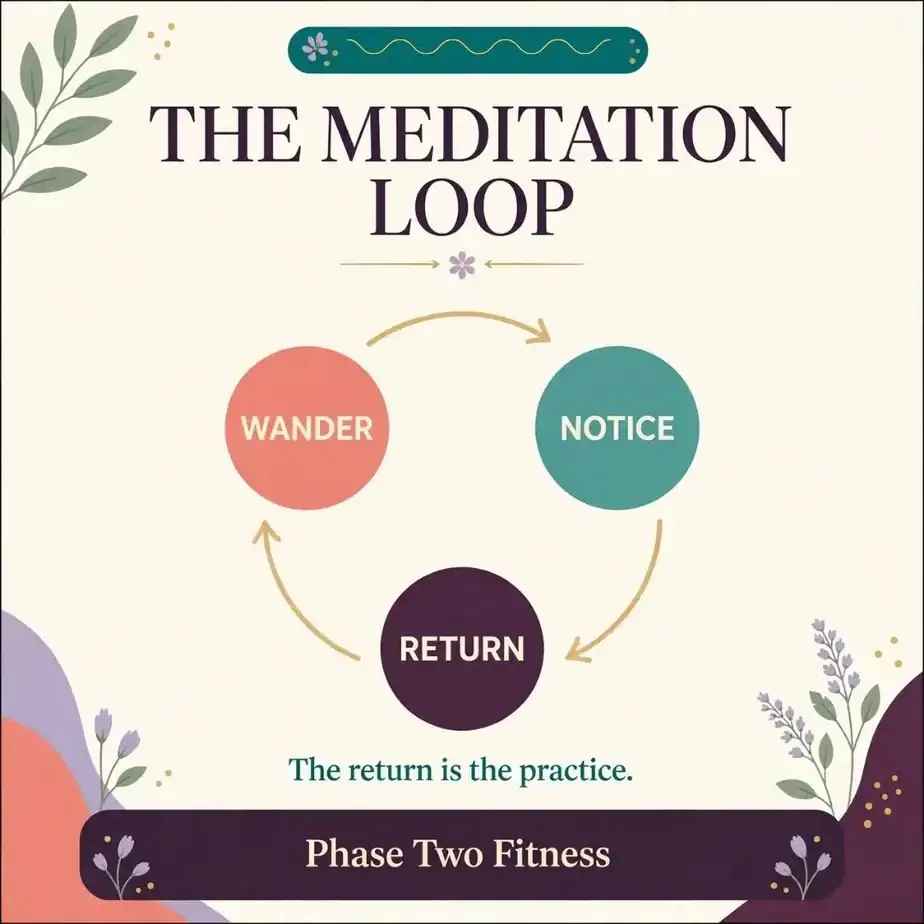
But a central part of mindfulness meditation is noticing when your attention has wandered and bringing it back.
Your mind wanders, you notice, and you return.
That return is the practice.
Now think about how differently you might approach your habits if you used that same idea.
You notice you’ve started negotiating about the walk. Instead of launching into a lecture about your lack of motivation, you recognize the old conversation and put on your shoes.
You find yourself halfway through the familiar evening snacking routine. You notice, pause, and decide what you actually want to do next.
You have a rough day and catch yourself planning a grand Monday restart. Then you remember that you can make your next useful choice today.
Each return gives you another opportunity to practice a response you want to get better at.
You don’t need to become a woman who never wobbles. You need experience recognizing the wobble and knowing how to respond.
Why another Monday restart doesn’t solve the problem
Most women I work with aren’t short on information.
They know vegetables exist and that walking is good for them. They know that eating straight from the bag while standing in the kitchen probably isn’t their most thoughtful approach to dinner.
They’ve read the books, tried the plans, and promised themselves a fresh start more times than they care to count.
So why does the same thing keep happening?
One reason is that we’re very good at making plans when the circumstances are comfortable, but we don’t always prepare for the moment when following through becomes inconvenient.
And when that moment arrives, we treat it as a sign that we need a new beginning.
One rough evening becomes “I’ll be good Monday.” A missed workout becomes “I need to get serious again.” Before long, we’re spending more energy recommitting than practicing.
That’s why I keep coming back to one of my favorite phrases:
PLAN STANDS; NEXT MOVE.
You already made a reasonable decision about what you wanted to do. When the familiar resistance shows up, you don’t necessarily need to reopen the entire discussion.
Maybe you planned to walk after lunch. You’re not in the mood, but nothing important has changed, so you put on your shoes.
Maybe your circumstances really have changed. You’re sick, injured, or dealing with something that genuinely needs your attention. In that case, you adjust the plan to fit reality.
Either way, you’re making a considered decision instead of automatically accepting whatever the old script suggests.
And when you do get off track? You don’t need to erase the day and begin again Monday. You can continue from wherever you are.
You can still want the old thing and make a different choice
Here’s another belief that trips women up: the idea that if they still want the chips, the wine, the couch, or the easier option, they haven’t really changed.
But wanting something doesn’t obligate you to do it.
You can want to skip your walk and still put on your shoes. You can want another glass of wine and decide to have sparkling water first. You can feel the pull toward an old routine and give yourself a chance to decide whether that’s what you actually want.

The urge doesn’t need to disappear before you can make a choice. This is especially useful with those automatic evening routines.
Let’s say you usually pour a glass of wine when you’re finished with the day’s responsibilities. You’ve decided you’d like to change that pattern, but when evening arrives, there it is: that familiar urge.
You could spend the next twenty minutes arguing with yourself. Or you could decide ahead of time that when the urge appears, you’ll pour sparkling water first.
That’s the first move.
It doesn’t mean you’ve sworn off wine forever. You’re simply interrupting the usual sequence long enough to make a deliberate choice about what comes next.
Sometimes you’ll still decide to have the wine. Sometimes the sparkling water will do just fine. And sometimes you’ll discover that what you really wanted was a way to mark the end of the day.
Now you’ve learned something useful about your pattern.
What to do when the hesitation shows up
Knowing that hesitation is an opportunity to practice is helpful, but I don’t want to leave you standing in the kitchen thinking, “Okay, great. Now what?”
Here are five things you can practice.
Recognize the moment without making it a verdict
When you feel the familiar resistance, try saying, “Oh. This is the moment.”
That’s a lot more useful than “Here we go again.”
You’re noticing what’s happening without immediately deciding what it says about you. It gives you a chance to respond rather than simply continuing the old sequence.
Listen for the script
What’s the first thing your brain says?
Maybe it’s “I already blew today anyway,” or “I deserve a treat,” or “It shouldn’t be this hard.”
You don’t need to psychoanalyze yourself for forty-five minutes. Just recognize the familiar explanation that’s trying to run the show.
Have your next move ready
This is where a little preparation can save a lot of negotiation.
Choose one recurring situation and decide ahead of time how you’ll respond.
When I want to skip my walk, I’ll put on my shoes.
When I want to snack automatically, I’ll put the food in a bowl and sit down to decide whether I want it.
When I start scrolling instead of going to bed, I’ll put my phone on the charger.
Choose something small enough that you’ll actually remember and do it when you’re tired, annoyed, or already halfway into the old routine.
Make your next move without waiting for motivation
You may still feel resistant. You may still want the familiar thing. And you might have a perfectly convincing argument for putting everything off until tomorrow.
You can acknowledge those feelings without letting them automatically make the decision.
Of course, you’re allowed to change a plan that no longer makes sense. The skill is recognizing whether you’re making a thoughtful adjustment or repeating an old negotiation.
Hold a short results meeting
Later, take a look at what actually happened.
Did you notice the hesitation? Did you remember your planned response? Were you able to do it? And, importantly, did that response help you make the choice you wanted to make?
If putting on your shoes still leaves you on the couch for forty minutes, maybe that’s not quite the right first move yet. Could you put your shoes by the door and walk to the mailbox? Would a different time work better?
Don’t turn this into another report card. You’re trying to find out what works in real life.
Count your reps. But check what they’re building.
Self-trust grows when you have evidence you can respond differently
I think this is one of the biggest changes we can make in how we approach healthy habits after 50.
🗃️ For years, many of us have collected evidence against ourselves. We remember the missed workouts, the evenings that got away from us, and the promises we didn’t keep.
But what about the times you noticed the old pattern a little sooner? The times you followed through after hesitating? Or the time you had one difficult evening and didn’t let it turn into a lost weekend?
Those experiences deserve your attention too. Not because we’re handing out gold stars for every little thing, but because they’re evidence that you’re learning to respond differently. And that evidence becomes more meaningful when you can see the response working in your actual life.
Maybe you still feel resistance before your morning walk, but you don’t spend twenty minutes debating it anymore. Maybe you still occasionally eat past comfortable fullness, but it doesn’t automatically trigger the “I blew it” story and three days of giving up.
That’s progress you can examine and build on.
If you’ve spent years believing that your repeated struggles prove you’re incapable of changing, consider a different possibility. The moment you’ve been using as evidence against yourself may be one of the most useful places to practice.
You don’t have to wait until it feels easy.
And you certainly don’t have to wait until Monday.
Ready to try this with one of your own patterns?
Recognizing the hesitation moment is a good start. But the next time you’re standing in the kitchen, negotiating with yourself about a snack, or trying to talk yourself out of that walk, it helps to have something practical to work with.
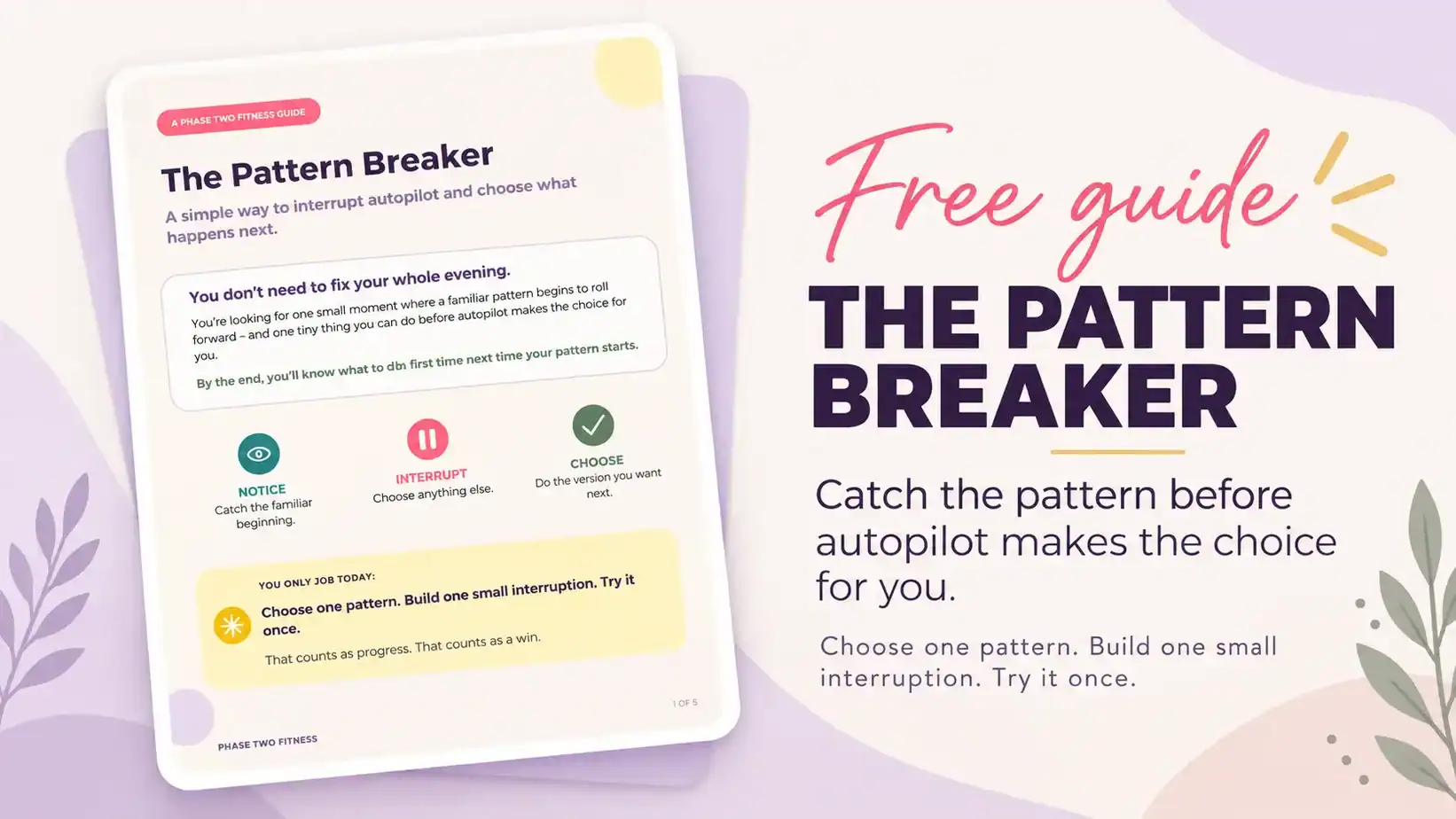
That’s why I created The Pattern Breaker, a free mini-guide to help you catch a familiar pattern, understand what’s happening, and choose one different response.
You don’t need to tackle every habit at once. Start with one pattern you’ve been wanting to change and see what you discover.
Get Your Free Pattern Breaker Guide