Autopilot Eating Isn’t Always Emotional Eating
“Why do I want to eat when I’m not even hungry?”
For years, one of the most common answers has been emotional eating. And emotional eating is certainly real. Sometimes we do reach for food when we’re stressed, lonely, overwhelmed, angry, disappointed, bored, or looking for relief.
But there’s a problem with using emotional eating as the explanation for every urge to eat without physical hunger: sometimes there isn’t an emotion to uncover. Sometimes the answer is much simpler.
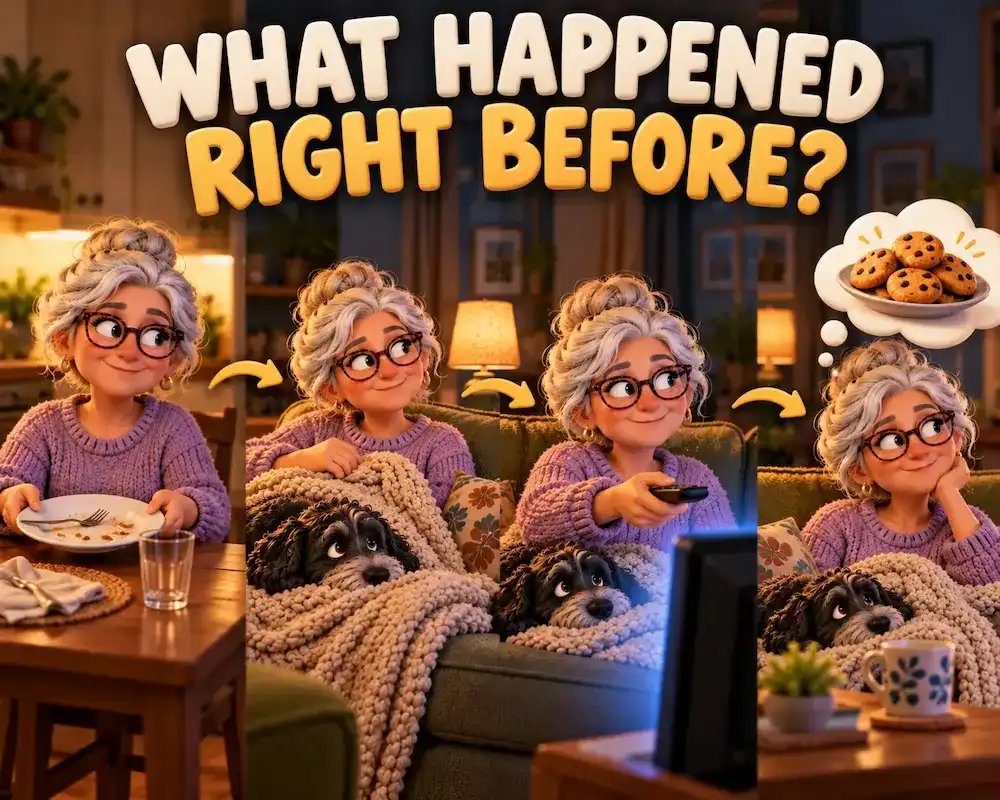
It’s 8:15. You’re sitting in your usual chair, the TV is on, and you know there are cookies in the pantry. And cookies sound good.
That’s still a pattern worth understanding. It just may be a cue-and-reward pattern rather than an emotional-distress pattern.
Sometimes the urge isn’t asking you to soothe a feeling. It’s simply following a familiar sequence.
You Don’t Always Need to Find the Feeling
When we assume every urge to eat must be emotional, we tend to start asking questions like Am I anxious? Am I lonely? What am I trying to soothe? What need am I avoiding? Those can be useful questions when emotion really is driving the urge. But they can also send you looking for something that simply isn’t there.
Maybe you aren’t upset. Nothing particularly difficult happened, and you’ve had a perfectly ordinary evening. You finished dinner, cleaned up the kitchen, settled into your usual spot to watch television, and suddenly found yourself thinking about the ice cream in the freezer.
That thought didn’t necessarily show up because your brain detected some unresolved emotional need. It may simply be that you’ve repeated this sequence so many times that thinking about something sweet has become part of settling in for the evening.
Dinner finished → sit down → TV → something sweet. The pattern itself has become familiar.
A Cue Can Start the Whole Thing
A cue is something that brings a familiar behavior to mind. It can be obvious, like seeing a bowl of candy on the counter, or surprisingly subtle, like settling into the chair where you usually have your evening snack.
The cue might be:
- ✅the time of day
- ✅a particular chair or turning on the television
- ✅finishing dinner or ending your workday
- ✅walking into the kitchen or opening the pantry
- ✅seeing someone else eat
- ✅knowing a certain food is in the house
- ✅beginning a familiar evening routine
Even availability itself can become a cue. You know the cookies are there, your brain remembers them, and they sound good. Before you know it, there’s an urge.
No emotional crisis required.
If this sounds familiar, you might also like why evening eating can start feeling automatic.
“It Just Sounded Good” Is a Real Answer
This is an important one, because sometimes we assume there must be a deeper explanation when “it sounded good” feels too simple. But food is rewarding. Taste is pleasurable, and your brain remembers experiences it has enjoyed. It makes sense that those foods might come to mind again.
That doesn’t mean you lack discipline, and it doesn’t automatically mean you’re trying to fill an emotional void. Sometimes the reward really is as straightforward as that tastes good.
Other times, eating offers a little stimulation, marks the end of the day, or becomes part of the transition from work to relaxing. Maybe it gives you ten minutes to put off a chore. And yes, sometimes there really is an emotion involved.
The point isn’t to decide ahead of time what the explanation must be. It’s to notice what actually happened.
The Question That Can Change the Pattern
Instead of immediately asking What am I feeling?, try asking What happened right before I wanted the food? That brings you closer to the actual moment, where you may find something specific you can work with.
Maybe you notice that you’d just sat down, turned on the TV, or walked through the kitchen. Maybe you saw the package, remembered what was in the pantry, or realized you almost always start thinking about dessert as soon as dinner is over.
Those details can tell you where the pattern begins. And once you can spot the beginning, you have a chance to practice a different response.
Curiosity Works Better Than a Premade Explanation
One of the easiest ways to get stuck is to decide what your behavior means before you investigate it. I ate when I wasn’t hungry, so I must be emotional eating. Maybe. But maybe not.
Try looking at what happened this time. Was there a feeling involved? Did you see the food, or just remember that it was there? Had you reached a familiar time of day, finished a routine, or wanted a little stimulation? Were you tired? Did the thought of eating show up because that’s what usually comes next?
You don’t have to ask all those questions every time. The point is to get curious about the actual sequence rather than forcing every urge into the same explanation.
You don’t need the most psychologically interesting answer. You need the most accurate one.
The more accurately you understand the pattern, the better you can choose what to practice when it shows up again.
What to Look for Next Time

The next time you notice an urge to eat when you aren’t physically hungry, skip the interrogation. You don’t need to solve yourself. Just look at the sequence and ask: When did the idea of eating first show up?
Then look one step backward. What were you doing, and where were you? What had just happened? What could you see, and what did you know was available? Is this the point in the evening when you usually reach for something?
You might discover an emotion, a familiar habit, or a connection your brain has made between television and snacks. All of those are useful clues. The answer doesn’t have to be dramatic to give you something to work with.
Once you’ve spotted a cue that keeps showing up, choose one small response to practice the next time it appears. Maybe you rest your hands on the counter for a moment before opening the pantry, or stay seated for thirty seconds when the thought of cookies arrives.
You can still decide to eat the cookies. You’re practicing noticing the familiar sequence before automatically following it, so you have a little more room to choose.
After a few tries, check: Are you catching the cue sooner? Is your planned response becoming easier to use? If not, what might you adjust?
If evening snacking is a common pattern for you, these ideas for examining nighttime snacking may help, too.
Not Every Urge Needs the Same Explanation
Autopilot eating doesn’t always begin with feeling bad. Sometimes it begins with the clock, the couch, the television, the pantry, or simply knowing that a certain food is in the house. It may be a familiar sequence your brain has practiced hundreds of times.
That distinction matters because you don’t need to keep digging until you uncover a hidden emotional wound every time cookies sound good. You need to understand what happened this time and decide what you’d like to do when that situation comes around again.
That’s where your next choice begins.

If you’re beginning to recognize your familiar eating patterns but aren’t sure what to do when they show up, The PAUSE Plan gives you a practical way to interrupt autopilot and choose your next move.
Want to remember this post? Save this to your favorite Pinterest board!