
The Willpower Myth: How to Stay Consistent With Weight Loss Over 50
Why knowing what to do isn’t always enough, and what to practice when your good intentions suddenly disappear.

You’ve tried the early morning workouts, counted calories, followed meal plans, and white-knuckled your way through enough “lifestyle changes” to last three lifetimes.
Some of those plans probably felt about as sustainable as wearing stilettos to the grocery store. 😂
And maybe they worked for a while.
Until you got tired. Or stressed. Or had a week where approximately 47 things needed your attention and none of them involved preparing vegetables.
Then came that familiar thought:
“If I just had more willpower, I could stick with this.”
But here’s something worth considering. What if the problem isn’t that you don’t have enough willpower? What if you’ve been relying on willpower to do a job it was never particularly well suited for?
Why Willpower Alone Isn’t a Reliable Plan
You’ve probably had this experience.
On Monday morning, you decide you’re going to make some changes. You’ve got your meals planned, your walking shoes ready, and a perfectly reasonable idea of how the week should go.
You mean every word of it.
Myth vs Reality
“If I really wanted to lose weight, I’d have enough willpower to follow my plan.”
Reality: Wanting a result and following through in a difficult moment are different things. You can care deeply about your goal and still need to practice handling familiar urges, distractions, and habits.
Then Thursday afternoon arrives.
You’re tired, something has irritated you, and suddenly you’re standing in front of the pantry having a very different conversation with yourself.
“Just a few chips.”
“I’ve been good all week.”
“I’ll get back to it tomorrow.”
What happened to Monday’s determination? It didn’t necessarily disappear. But your immediate circumstances changed.
Our choices are influenced by more than long-term intentions. Habits, emotions, expectations, convenience, and the appeal of immediate rewards all play a role. When you’re tired or stressed, the familiar option can become particularly attractive.
That’s why I don’t think “I’ll just be stronger next time” is a very useful strategy. It doesn’t tell you what to do when next time actually arrives.
Your Brain Isn’t Working Against You
You’ll sometimes hear that your brain is wired for survival, not weight loss. There’s a useful idea behind that, but it doesn’t tell the whole story.
Your brain learns from repetition. Behaviors that have provided relief, comfort, convenience, or reward can become familiar responses to certain situations.
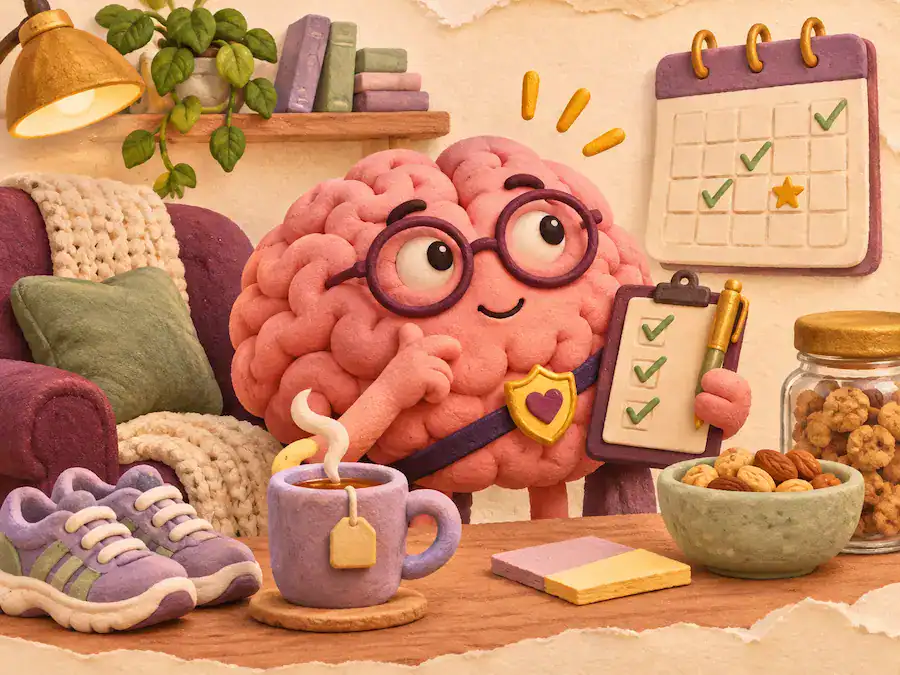
🔹Maybe you reach for something sweet when the afternoon gets difficult.
🔹Maybe the kitchen calls your name when the house gets quiet.
🔹Or maybe you’ve developed a surprisingly sophisticated ability to avoid looking at the exercise plan you made yesterday. 😂
These patterns don’t mean you’re incapable of changing, but understanding why they happen isn’t necessarily enough to change them, either.
You can know exactly what you intended to do and still find yourself wanting absolutely nothing to do with it.
That’s the moment I’d like you to start paying attention to. Not Monday morning when you’re making the plan, but Thursday afternoon when you’re negotiating your way out of it.
The Moment Your Plan Stops Sounding Appealing
Let’s say you’ve decided to stop automatically snacking after dinner.
You have good reasons. You want to feel better, support your weight-loss goals, and stop ending every evening wondering why you ate something you hadn’t really planned to eat.
Then it’s 8:17 p.m.
Quick Tips
Signs Your Old Pattern is Taking Over
🪫You’re negotiating with yourself about “just one.”
🪫You’re deliberately avoiding the plan you made.
🪫“I’ll start tomorrow” suddenly sounds very appealing.
🪫You’ve already decided what one choice means about your entire day.
Notice one of these? That’s your cue to get curious, not deliver another lecture to yourself.
Dinner is over. You’re comfortable. You’re watching television.
And Cookie Radar has apparently detected something interesting in the kitchen.
You remember your plan. You know why you made it. And suddenly, you’re not particularly interested in consulting it.
Sound familiar?
This is where we often assume we need more discipline.
But what would happen if you got curious instead?
You might notice that you aren’t especially hungry. You’re restless, perhaps, or looking for a little something enjoyable at the end of the day. Or maybe you are hungry, and your original eating plan needs adjusting.
Either way, you’ve learned something useful.
And now you have more options than automatically eating or trying to force yourself not to.
You could choose a snack and enjoy it deliberately. You could do something else for a few minutes and see whether the urge changes. Or you could decide to eat what you originally wanted.
➡️The important shift is that you’ve noticed the pattern and created an opportunity to choose instead of simply following the usual sequence.
That’s something you can practice.
Make Your Healthy Habits Easier to Start
Now, I haven’t abandoned the idea of setting up your environment to make healthy choices easier.
Quite the opposite.
Habit Hooks 101
✅Link new habits to existing ones (coffee + morning walk)
✅Start ridiculously small (seriously — think tiny!)
✅Set up your environment for success
✅Remove friction from healthy choices
A little preparation can make a big difference.
One of my favorite approaches is connecting a new habit to something you already do.
For example:
✅️After starting the coffee maker, do five countertop push-ups.
✅️After brushing your teeth, do five comfortable chair stands.
✅️After dinner, put on your walking shoes before sitting down.
✅️Before settling in for the evening, decide whether you want a planned snack.
These are sometimes called habit stacks or habit hooks.
They’re useful because you don’t have to invent a completely new routine. You’re giving the behavior a familiar place in your day.
But here’s something I want to add.
➡️Making a habit easier doesn’t guarantee you’ll feel like doing it.
You can leave your walking shoes beside the door and still walk straight past them. You can prepare a healthy lunch and still decide that something else sounds better. That doesn’t make the preparation useless, it means you need another skill alongside it: recognizing what happens when you’re about to sidestep the plan.
A Three-Step Practice for the Moments That Trip You Up
💡Try This Next Time
🛤️The next time you’re about to skip your walk, reach for a snack, or postpone something you’ve planned, ask yourself:
“What makes the familiar choice so appealing right now?”
Then choose one ordinary next move. You don’t have to love the choice to practice making it.
1. Catch the moment
Notice what’s happening before you make your decision.
Maybe you hear yourself say: “I’ll do it tomorrow.” “One won’t hurt.” “I’ve already blown today anyway.” You don’t need to argue with the thought. Just recognize that you’ve heard something familiar.
2. Get curious about what’s pulling you
Ask yourself:
“What makes the old choice so appealing right now?”
Maybe you’re tired. Or maybe the alternative feels like too much work. Maybe the snack promises a few minutes of enjoyment, or skipping the workout promises relief.
Don’t rush to correct yourself. Find out what’s happening.
3. Choose one ordinary next move
Once you know a little more, consider your options.
You might take a five-minute walk instead of the twenty minutes you planned.
You might make yourself a satisfying snack and eat it sitting down rather than grazing in the kitchen.
You might decide that today’s workout needs to be rescheduled, and choose a specific time.
The next move doesn’t have to be impressive. it just needs to be something you can actually use in your real life.
And here’s an important point: you don’t have to feel motivated before making that choice. You can notice that you don’t want to follow your plan and still choose a response that supports what you want.
What If You Already Went Off Plan?
This is where another familiar pattern can take over.
⭕You ate more than you intended.
⭕You skipped your walk.
⭕Or the week didn’t go anything like you planned.
And now your brain is preparing its official report:
“See? You never stick with anything.”
What Progress Can Actually Look Like
You’re On The Right Track When…
🛤️You notice the pantry negotiation sooner.
🛤️You remember your plan even though you don’t feel like following it.
🛤️You make a deliberate choice rather than reacting automatically.
🛤️You recover from an unplanned choice without writing off the day.
Before you sign off on that conclusion, separate what happened from what you’re making it mean.
“I skipped two workouts” is information. “I’m incapable of being consistent” is a judgment.
Those are NOT the same thing.
And only one of them gives you something useful to work with.
📌Maybe you planned your workouts at a time that rarely works.
📌Maybe you were genuinely exhausted.
📌Maybe your routine was too ambitious for the week you actually had.
What could you adjust? You don’t need to compensate for what happened, punish yourself, or wait for another Monday. You can choose your next ordinary move.
➡️That’s how you practice consistency without requiring every day to go according to plan.
What About Weight Loss After 50?
There’s no question that midlife can introduce additional considerations.
Menopause-related changes in body composition, sleep difficulties, medications, health conditions, and differences in activity can all influence weight management.
Those are real factors, and they deserve attention.

But even when you have an appropriate nutrition and activity plan, there’s still the everyday challenge of putting that plan into practice.
❓What happens when you’re tired?
❓What happens when you’ve had a disappointing day?
❓What happens when the familiar choice feels more appealing than the one you intended to make?
That’s the part we’re working on here.
Not because mindset replaces nutrition, movement, or medical guidance, but because your ability to respond to those ordinary moments affects how consistently you can put the things you know into practice.
And that’s a skill you can continue developing at any age.
The Real Alternative to Relying on Willpower
I don’t think the solution is to eliminate willpower from your life. Sometimes you really will need to make an effort. Sometimes you’ll choose something difficult because it supports what you want in the long run.
➡️But you shouldn’t have to depend on a heroic burst of determination every evening.
A more practical approach is to understand your patterns, make helpful choices easier, prepare for predictable obstacles, and practice what to do when your plans meet real life.
☑️You’ll still have urges.
☑️You’ll still have days when you don’t feel like doing what you planned.
☑️And you’ll still make choices you wish you’d made differently.
The difference is that those moments can become something you learn to handle rather than automatic evidence that you need to start all over again.
You don’t need to become a woman who never struggles. You can become a woman who recognizes her patterns and knows how to work with them.
Your Next Step: Meet the Pattern Before It Takes Over
If you’ve recognized yourself in the pantry negotiations, the postponed workouts, or the familiar “I’ll start Monday” conversation, I have something for you.
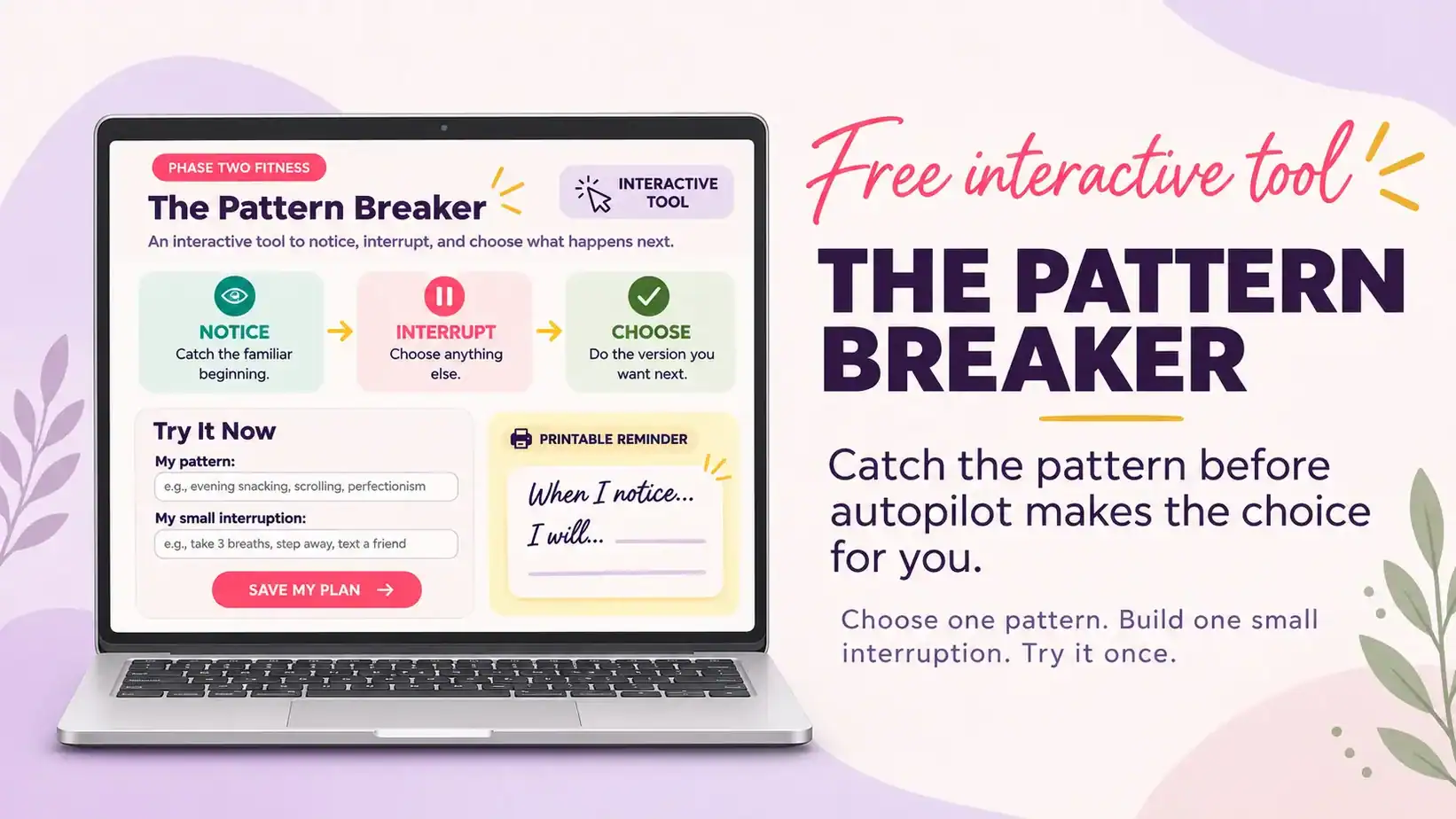
My free Pattern Breaker mini-guide helps you take one familiar pattern and look at it more closely. You’ll learn to notice the moment it begins, recognize the usual sequence, and choose one small way to interrupt it.
No complete life overhaul required, just one real pattern and one practical move to try.
And if you’d like somewhere to keep practicing, come join us inside Stop Starting Over Women 50+.
It’s where we work with the ordinary moments that can make healthy habits difficult to maintain, share what we’re learning, and practice building self-trust through real-life choices.

Want to remember this post? Save it to your favorite Pinterest board!


